
Baoshan vs. Chiba: Detailed 2026 Cost of Living & Quality Comparison
 Baoshan
Image by:Mad Skillz,,
Baoshan
Image by:Mad Skillz,,
 Chiba
Image by:Yuri Yuhara
Chiba
Image by:Yuri Yuhara
Baoshan, with a population exceeding two million, represents a significant urban hub, contrasting with Chiba's smaller population of nearly one million. Economically, Chiba demonstrates superior performance through its higher GDP per capita ($46,200 versus Baoshan's $22,100) and elevated average monthly net salary ($1,571.15). Although Baoshan exhibits a faster GDP growth rate (5.25% compared to Chiba's 1.68%), the former lacks the granular data necessary for a comprehensive economic assessment. Housing costs in Chiba are exceptionally high, reflecting its advanced urban development, while Baoshan's figures remain largely undocumented, presenting a significant gap in the data landscape. The disparity in available information complicates direct comparisons, yet Chiba's economic indicators paint a picture of a more affluent urban environment, potentially supported by infrastructure like Maglev systems enhancing connectivity.
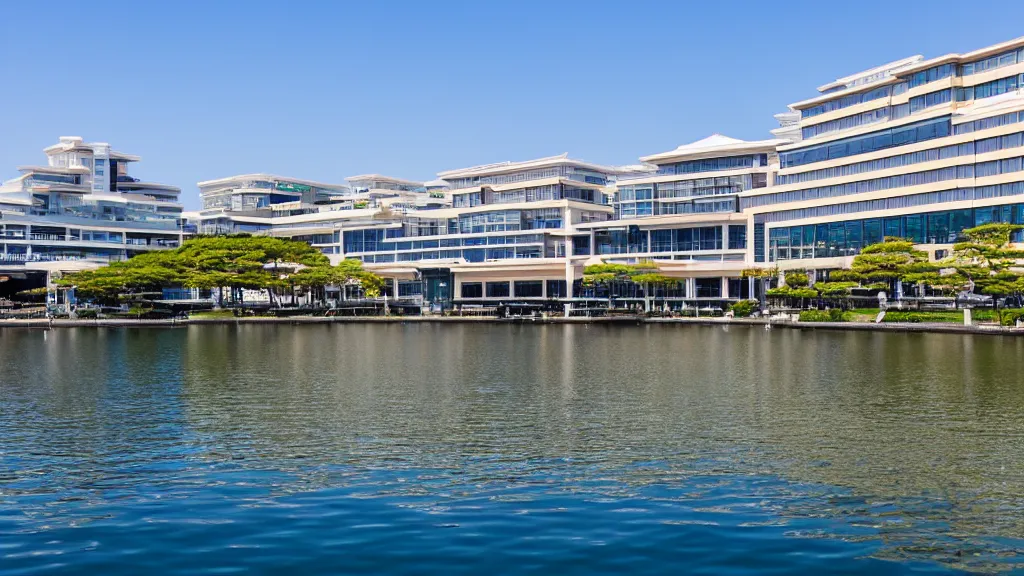
Chiba's advantage extends to quality of life metrics, which are meticulously documented. The city achieves high scores in safety (70.59), healthcare (76.85), and environmental quality (low pollution index of 17.82), suggesting sophisticated urban planning and regulatory oversight, possibly involving advanced technologies like Brise-soleil facades for climate control. Commute times are moderate, and the cost of living, particularly in Tokyo and surrounding areas, is substantial, ranging from moderate to exorbitant levels. Baoshan, conversely, offers no comparable data, leaving its living standards and the effectiveness of potential environmental mitigation strategies, such as sulfur-scrubbers, unknown. Chiba's detailed profile indicates a high standard of living, albeit one that comes with significant financial demands.
For investors and professionals, Chiba presents a scenario of established economic strength and high quality of life, despite its elevated costs, including high housing prices and expensive living expenses. Its slightly lower mortgage interest rate (1.7%) might offer some relief for property investments, but the overall financial burden remains considerable. Baoshan, while showing faster economic expansion, remains shrouded in data scarcity, making investment decisions challenging without further insight into its job market or regulatory framework. The decision favors Chiba for those prioritizing immediate economic output and verifiable quality metrics, accepting the associated costs, whereas Baoshan represents a higher-risk, data-poor option requiring deeper investigation into its operational infrastructure and regulatory compliance measures.
The comparison reveals Chiba as a highly developed Japanese city excelling in economic output, quality of life, and data transparency, despite its high cost of living. Its infrastructure supports efficient public transport and essential services, contributing to a generally high standard of living. Baoshan, while potentially experiencing rapid development, presents a markedly different picture due to the scarcity of available data across economic, housing, and quality-of-life dimensions. The limited information, even on basic goods like beef, prevents a thorough assessment of its living conditions or environmental management systems. The choice between these cities hinges on priorities: Chiba offers certainty and comprehensive data for those willing to bear the costs, whereas Baoshan's potential for faster growth and lower costs must be weighed against the significant data deficit and associated uncertainties.
 Baoshan
 Chiba
ChibaLocal cuisine & dishes
Baoshan
Chiba
 Baoshan
 Chiba
ChibaTravel & attractions
Baoshan
Chiba
Real estate & living comparison
| Baoshan | Chiba | |
|---|---|---|
| Beef Round or Equivalent Back Leg Red Meat (1 kg) | 14 USD | 15.26 USD |
| GDP Growth Rate: | 5.25 USD | 1.68 USD |
| GDP Per Capita ($) : | 22100 USD | 46200 USD |
| Population | 2,431,211 | 975,014 |
Last updated: 2026-04-05T11:47:05+00:00
Comments for this comparison