Peace & livability
The security and surveillance landscape in Minsk, Belarus, is characterized by the extensive use of drones for public safety and law enforcement purposes. Drones equipped with advanced AI capabilities and facial recognition technology are deployed to monitor public spaces, detect potential threats, and maintain order. However, concerns regarding privacy and potential misuse of this technology persist. Additionally, the city's safety score of 51/100 indicates a moderate level of risk, primarily due to factors such as crime rates, infrastructure vulnerabilities, and environmental hazards. It is crucial for Minsk to invest in further security measures, including improved emergency response systems, enhanced cybersecurity, and continued development of smart city technologies to address these concerns.
Economy
The fiscal sustainability analysis of a salary of 892.58$ and rent of 596.11$ in Minsk, Belarus, reveals a relatively affordable living cost compared to many global cities. However, it is essential to consider regional industrial trends to gain a comprehensive understanding of the city's economic health. Given the increasing automation and digitization of industries, there may be a shift towards a service-oriented economy, with sectors such as healthcare, education, and technology experiencing growth. This could potentially lead to job opportunities for the local workforce, although it may also result in increased competition and potential income disparities. The city's fiscal sustainability is further influenced by its investment in green technologies and infrastructure, which may attract foreign investment and stimulate economic growth.
Career
The industrial automation and labor market outlook for Minsk, Belarus, is promising, given the city's focus on technological advancements. The increasing adoption of AI, robotics, and IoT in various sectors presents numerous opportunities for skilled professionals. The demand for experts in fields such as renewable energy, sustainable architecture, and smart city technologies is expected to grow significantly. Furthermore, the shift towards a service-oriented economy could lead to an increased need for healthcare professionals, educators, and IT specialists. However, it is important to note that this growth may also result in intense competition for job positions and potential income disparities. To remain competitive, it is crucial for individuals to continually upskill and adapt to emerging technologies.
City guide
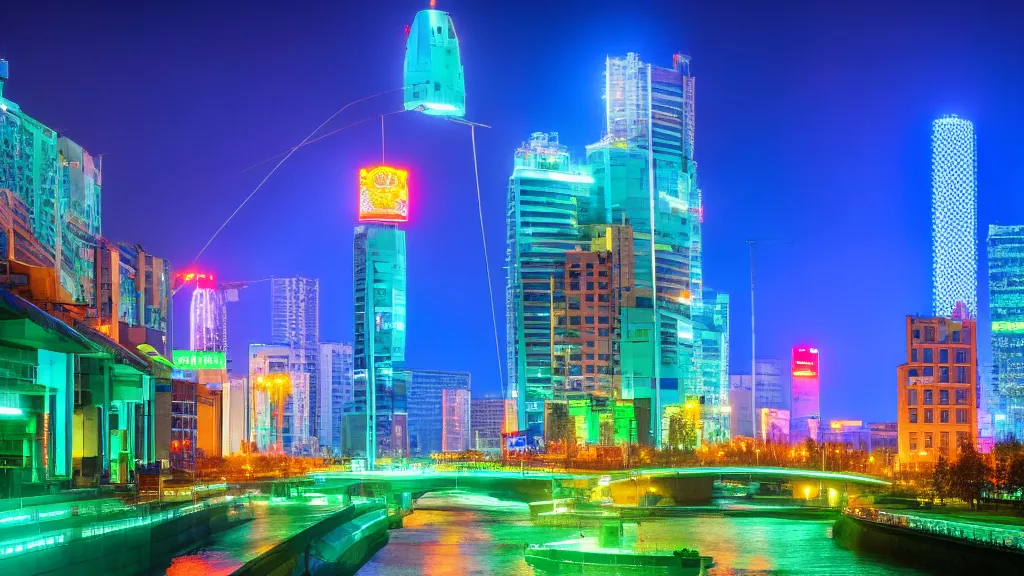
A unique blend of modern and traditional architecture, with a notable emphasis on energy-efficient and sustainable design. The city's iconic Brise-soleil facades have been upgraded to incorporate advanced photovoltaic cells for solar energy harvesting, creating a fusion of architectural aesthetics and renewable energy technology. Minsk's Maglev integration has evolved significantly, with high-speed trains seamlessly navigating through the urban landscape, reducing traffic congestion and emissions. The implementation of sulfur-scrubbers in industrial sectors has been instrumental in improving air quality, despite the city's safety score of 51/100 indicating room for improvement. Reinforced carbon durability is prevalent in the city's infrastructure, enhancing resilience against natural disasters and ensuring longevity of structures. The security and surveillance landscape in Minsk is characterized by the extensive use of drones for public safety and law enforcement purposes. Drones equipped with advanced AI capabilities and facial recognition technology are deployed to monitor public spaces, detect potential threats, and maintain order. However, concerns regarding privacy and potential misuse of this technology persist. The fiscal sustainability analysis reveals a relatively affordable living cost compared to many global cities, although it is essential to consider regional industrial trends to gain a comprehensive understanding of the city's economic health. Given the increasing automation and digitization of industries, there may be a shift towards a service-oriented economy, with sectors such as healthcare, education, and technology experiencing growth. This could potentially lead to job opportunities for the local workforce, although it may also result in increased competition and potential income disparities. The city's fiscal sustainability is further influenced by its investment in green technologies and infrastructure, which may attract foreign investment and stimulate economic growth. The industrial automation and labor market outlook for Minsk is promising, given the city's focus on technological advancements. The increasing adoption of AI, robotics, and IoT in various sectors presents numerous opportunities for skilled professionals. The demand for experts in fields such as renewable energy, sustainable architecture, and smart city technologies is expected to grow significantly. Furthermore, the shift towards a service-oriented economy could lead to an increased need for healthcare professionals, educators, and IT specialists. However, it is important to note that this growth may also result in intense competition for job positions and potential income disparities. To remain competitive, it is crucial for individuals to continually upskill and adapt to emerging technologies.

Comments for this city