
Kinshasa vs. Bimbo: Detailed 2026 Cost of Living & Quality Comparison
 Kinshasa
Image by:Rak Man
Kinshasa
Image by:Rak Man
 Bimbo
Image by:Edouard MIHIGO
Bimbo
Image by:Edouard MIHIGO
Kinshasa, the sprawling capital of the Democratic Republic of the Congo with a population exceeding 12.8 million, operates on a vastly different scale compared to Bimbo, a significantly smaller Central African city with approximately 124,000 inhabitants. This analysis compares 2026 cost of living and quality of life data for these distinct locations. Kinshasa's dataset provides comprehensive indices covering safety, health, climate, property price to income, commute, and pollution, alongside detailed cost categories. Bimbo's data, while offering regional quality of life scores and cost indices alongside key economic indicators like GDP per capita and property prices, presents a less granular and structurally different picture, complicating direct comparisons.
Economically and concerning housing, the divergence between Kinshasa and Bimbo is stark. Kinshasa demonstrates significantly inflated costs across nearly all goods and services, from basic staples like milk, bread, rice, and chicken to transportation, utilities, and internet services. The city's property market is particularly extreme, with exorbitant apartment prices, especially in the city center, coupled with a very low average net salary, resulting in a concerning property price to income ratio of 42.14. Conversely, Bimbo offers substantially lower costs for food, transport, utilities, and housing, with apartment prices representing a fraction of those in Kinshasa. Although Bimbo's economic data is limited, its GDP per capita of $1,100 and lower property price index suggest a lower overall cost base, despite the lack of direct salary figures hindering a complete cost-benefit analysis.
The quality of life data reveals profound differences, largely dependent on the available indices for each city. Kinshasa's metrics paint a generally bleak picture: a near-bottom global Safety Index of 27.92, a low Health Care Index of 20.37, a high Pollution Index of 81.9, and a lengthy average Traffic Commute Time Index of 75. The Climate Index of 80.95 suggests favorable weather but fails to fully mitigate the impact of pollution. Bimbo's regional scores present a complex and potentially contradictory view. While remote areas like Mbaiki (92.21) and Mongoumba (96.86) show relatively high scores, and Damara (102.53) exceptionally so, scores for the main city area (Bangui, index 32.01) and other locations like Boda (177.36) and Bouca (315.71) are alarmingly low or extremely high, indicating significant internal disparities. The interpretation of these high scores for remote areas is ambiguous without further context, starkly contrasting with lower indices potentially linked to more developed parts of Bimbo.
Assessing investment and career opportunities highlights Kinshasa's considerable hurdles. The extremely low average net salary ($362.5 USD monthly) combined with high living costs and a very high mortgage interest rate (15%) severely limits financial stability and investment potential for most residents. Bimbo presents a contrasting, albeit limited, perspective. Its GDP per capita of $1,100 suggests a lower overall economic base than Kinshasa's potential, though investment data is scarce. The provided property prices (e.g., $1,425.42 per sqm) are considerably lower than Kinshasa's, potentially indicating more affordable investment opportunities, particularly in real estate, within a less developed economy. Career prospects in Bimbo are not explicitly detailed, but the lower cost of living could offer greater purchasing power, yet the economic indicators point to limited growth potential (GDP growth rate 0.87%) and a small population base (1.76% growth rate). Kinshasa's potential for higher salaries might be offset by the immense cost of living and pervasive safety concerns.
In essence, Kinshasa and Bimbo represent fundamentally different urban environments. Kinshasa, despite its large population and regional economic weight, confronts severe challenges in safety, healthcare, pollution, and the critical mismatch between low salaries and high living costs, including prohibitively expensive housing. Bimbo, while smaller and with a lower GDP per capita, shows potential for better quality of life in its more remote regions according to its indices, but the data is fragmented and includes concerning low scores for its main areas. The investment climate in Bimbo appears potentially more favorable due to lower property costs, but remains clouded by limited economic data. This comparison underscores the critical importance of location-specific data and the necessity for further investigation into both cities' economic opportunities and the actual living conditions, especially regarding the anomalous high scores for remote Bimbo regions.
 Kinshasa
 Bimbo
BimboLocal cuisine & dishes
Kinshasa
Bimbo
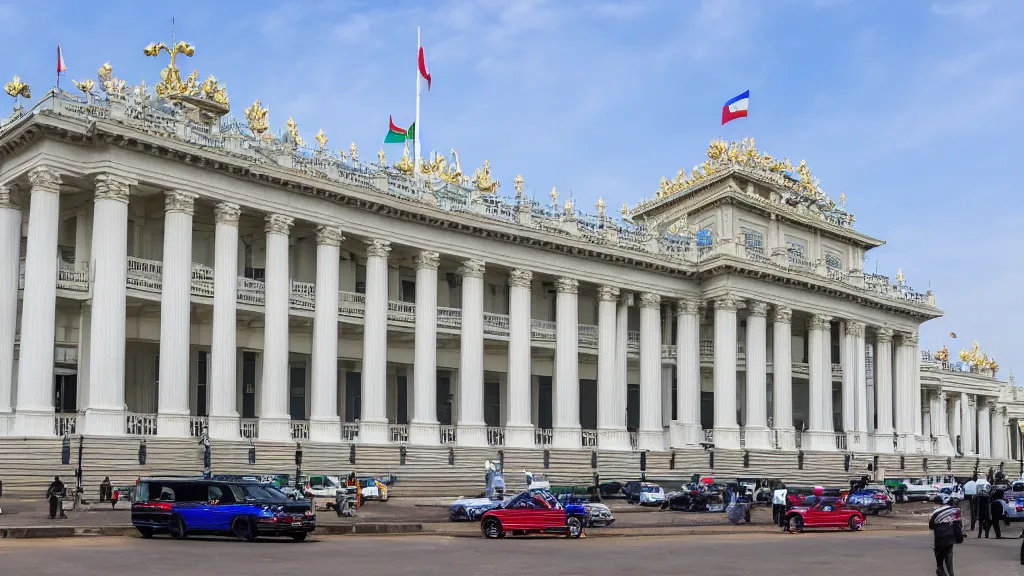 Kinshasa
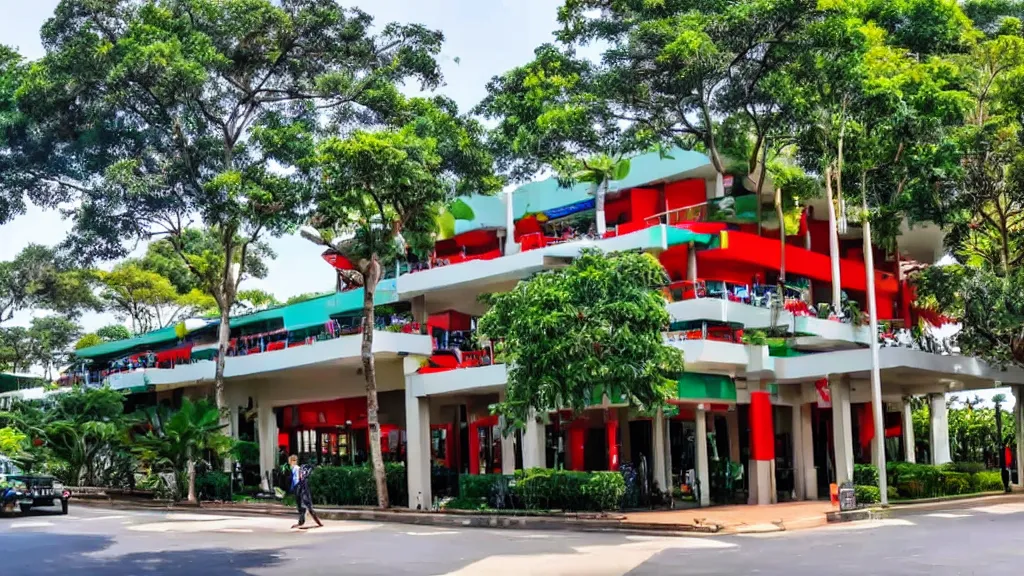 Bimbo
BimboTravel & attractions
Kinshasa
Bimbo
Real estate & living comparison
| Kinshasa | Bimbo | |
|---|---|---|
| Price per Square Meter to Buy Apartment in City Centre | 5110.44 USD | 1425.42 USD |
| Population | 12,836,000 | 124,176 |
Last updated: 2026-04-05T11:45:00+00:00
Comments for this comparison