
Beijing vs. Xinyang: Detailed 2026 Cost of Living & Quality Comparison
 Beijing
Image by:zhang kaiyv
Beijing
Image by:zhang kaiyv
 Xinyang
Image by:Mad Skillz,,
Xinyang
Image by:Mad Skillz,,
Beijing, China's sprawling megacity with over 18.5 million inhabitants, functions as a global political and cultural epicenter alongside a showcase for rapid modernization, representing the nation's developmental pinnacle. In stark contrast stands Xinyang, a significantly smaller urban center with approximately 6.1 million residents located in Henan Province, operating on a distinctly different regional scale with its own economic structure and pace of life. While macroeconomic indicators such as GDP per capita ($22,100) and growth rates (5.25%) appear comparable between the two locations, the fundamental disparities in scale, infrastructure investment, and global exposure position Beijing as a world-class metropolis while establishing Xinyang's more localized operational context.
Economically, both Beijing and Xinyang exhibit similar GDP per capita figures ($22,100) and comparable GDP growth rates (5.25%), suggesting a similar level of economic dynamism, though the impact is distributed differently across vastly different urban landscapes. However, the economic reality for residents manifests distinctly through cost structures. Beijing boasts a significantly higher average monthly net salary after tax ($1,539.44) compared to Xinyang's data, which only provides the interest rate. This suggests higher disposable income in Beijing, yet it is counterbalanced by substantially higher cost of living expenses. The purchasing power index favors Beijing, reflecting this dynamic. Regarding housing, the disparity is immense; Beijing's property prices are exorbitant, with apartment prices per square meter reaching $12,554 in the city center and $6,279 outside, whereas Xinyang's specific price data is absent. Rent reflects this, with a central Beijing 1-bedroom apartment costing nearly $860 monthly versus a likely much lower figure in Xinyang, despite the latter's data gap. The property price-to-income ratio in Beijing is exceptionally high at 30.58, indicating a significant financial burden for potential homeownersship, a factor not explicitly addressed in Xinyang's limited real estate data.
The quality of life presents a contrasting picture between the two cities. Beijing generally scores higher across most indices provided, including a higher quality of life index (118.84), a higher safety index (74.75), and a lower pollution index (77.03) compared to Xinyang's unavailable data. Access to specialized services, such as potentially advanced healthcare systems featuring state-of-the-art facilities, and international schools with diverse curricula, is likely superior in Beijing. The city's architectural landscape, potentially featuring advanced energy-efficient designs like sophisticated Brise-soleil facades on many modern buildings, contributes to its high quality-of-life perception. Xinyang's data, while lacking direct comparison points, shows slightly lower costs for basic goods and services (e.g., inexpensive restaurant meals, lower utility bills for a standard apartment), potentially indicating a lower cost burden for daily necessities, though the trade-off is likely a different overall lifestyle and access to amenities compared to Beijing's offerings. Furthermore, Beijing's air quality management, potentially incorporating advanced filtration systems like Sulfur-scrubbers in industrial zones and power plants, contributes to its relatively lower pollution index.
From an investment and career perspective, both cities share the same GDP per capita ($22,100) and GDP growth rate (5.25%), suggesting similar macroeconomic conditions. However, the nature of investment opportunities and career prospects differs vastly. Beijing, as the capital, offers unparalleled access to national and international business networks, diverse job markets across high-tech, finance, government, and culture, and likely more prestigious career paths and higher potential for rapid advancement in numerous sectors. Xinyang, while sharing the same economic metrics, likely offers a more limited range of industries and job opportunities, potentially concentrated in manufacturing, agriculture, or public sector roles, with fewer multinational corporations and potentially slower career progression. The slightly higher interest rate in Xinyang (3.49%) might reflect different lending conditions or risk assessments in its local market compared to Beijing's financial environment. The capital's superior infrastructure, including potentially advanced transportation networks like high-speed rail connections or even futuristic possibilities like Maglev systems, further enhances its appeal for both investment and career development.
In conclusion, Beijing and Xinyang represent two distinct types of urban environments within China. Beijing is the dynamic, resource-intensive capital, offering world-class opportunities, higher salaries, and generally better quality-of-life indicators but at a significantly higher financial cost. Xinyang, while sharing similar economic growth metrics, operates on a much smaller scale, likely offering a lower cost of living for basic necessities but with potentially fewer high-level job opportunities and a different overall lifestyle. The choice between the two depends entirely on individual priorities: the aspirational, high-cost, cosmopolitan life of a megacity versus the potentially more affordable, regionally-focused existence of a smaller urban center.
 Beijing
 Xinyang
Local cuisine & dishes
Beijing
Xinyang
 Beijing
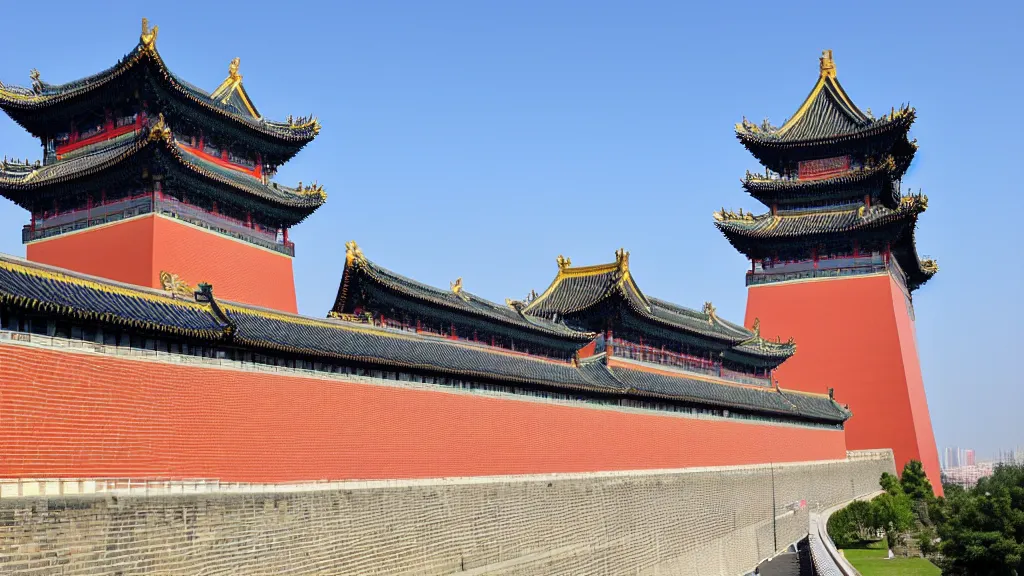 Xinyang
Travel & attractions
Beijing
Xinyang
Real estate & living comparison
| Beijing | Xinyang | |
|---|---|---|
| International Primary School, Annual Tuition per Child | 24202.38 USD | 11002.46 USD |
| Private Full-Day Preschool or Kindergarten, Monthly Fee per Child | 694.34 USD | 362.72 USD |
| Jeans (Levi's 501 or Similar) | 59.29 USD | 51.51 USD |
| Men's Leather Business Shoes | 104.74 USD | 83.43 USD |
| Apples (1 kg) | 2.19 USD | 1.91 USD |
| Bananas (1 kg) | 1.76 USD | 1.1 USD |
| Bottled Water (0.33 Liter) | 0.32 USD | 0.28 USD |
| Cappuccino (Regular Size) | 2.97 USD | 2.29 USD |
| Annual Mortgage Interest Rate (20-Year Fixed, in %) | 3.4 USD | 3.49 USD |
| GDP Growth Rate: | 5.25 USD | 5.25 USD |
| Cinema Ticket (International Release) | 7.62 USD | 5.95 USD |
| Gasoline (1 Liter) | 1.12 USD | 1.16 USD |
| Taxi 1 Hour Waiting (Standard Tariff) | 7.11 USD | 4.35 USD |
| Basic Utilities for 85 m2 Apartment (Electricity, Heating, Cooling, Water, Garbage) | 53.81 USD | 68.88 USD |
| Broadband Internet (Unlimited Data, 60 Mbps or Higher) | 13.77 USD | 10.59 USD |
| Population | 18,522,000 | 6,109,106 |
Last updated: 2026-04-05T15:40:02+00:00
More city comparisons
From China
- Fuyang vs Jinan
- Nanjing vs Dublin
- Huaihua vs Tacna
- Jining vs Kairouan
- Zunyi vs Ankara
- Dalian vs Melbourne
- Mexico City vs Zhumadian
- Monterrey vs Yongzhou
- Hong Kong vs Hangzhou
- Cincinnati vs Qujing
- Quebec City vs Shijiazhuang
- Chongqing vs Dallas
- Ho Chi Minh City vs Dalian
- Shanghai vs Toronto
- Alexandria vs Jieshou
- Jining vs Zhaotong
- Jakarta vs Fuyang
- Nanjing vs Indianapolis
- Moron vs Xiantao
- Yidu vs Rostock
Comments for this comparison