
Fort Wayne vs. Asaba: Detailed 2026 Cost of Living & Quality Comparison
 Fort Wayne
Image by:Zachary Vessels
Fort Wayne
Image by:Zachary Vessels
 Asaba
Image by:Taiwo Samson,,
Asaba
Image by:Taiwo Samson,,
The fundamental divide between Fort Wayne and Asaba lies in their economic structures and developmental stages. Fort Wayne, a developed US city with a population over 345,000, operates within a stable, high-income economy, offering established industries and robust infrastructure. Asaba, a Nigerian city of 500,000, is significantly younger and operates within a lower-income context, heavily influenced by its strategic location and oil sector. This disparity immediately shapes the economic landscape and the subsequent quality-of-life considerations for residents in each city.
Fort Wayne's higher income levels translate directly into a higher cost of living, particularly concerning housing. A typical net salary in Fort Wayne ($3,515 USD monthly) comfortably covers the city center property prices ($1,700 USD per square meter). While Asaba's specific housing costs aren't detailed, the city's lower GDP per capita ($5,600 USD) strongly suggests significantly cheaper property, even if salaries are considerably lower. This creates a housing gap where affordability in Fort Wayne is tied to higher earnings, whereas Asaba offers lower property costs but within a vastly different economic reality. Furthermore, Fort Wayne's economic indicators show a mature market with a low population growth rate (0.67%) and GDP growth (2.89%), contrasting sharply with Asaba's higher population growth (2.52%) despite similar GDP growth (2.86%).
Quality of life metrics paint a clear picture favoring Fort Wayne. The city boasts higher scores across key areas like safety (59.33) and healthcare (77.22), alongside a moderate cost of living index (65.03). Asaba lacks comprehensive data for direct comparison, but its lower GDP per capita and different economic structure strongly imply potential challenges regarding public safety, healthcare access, and overall environmental quality compared to Fort Wayne's established indices. The available data suggests Asaba's quality-of-life factors likely lag behind those of the developed US city.
From an investment and career standpoint, the two cities present entirely different propositions. Fort Wayne operates within a diversified, stable, high-income economy ($74,600 GDP per capita), offering a broad range of career opportunities supported by a skilled workforce and higher education institutions. Its low population growth signals a mature but steady job market. Conversely, Asaba's economy ($5,600 GDP per capita) is much lower, potentially offering growth (similar GDP growth, higher population growth) but with greater economic instability and fewer diversified job prospects, largely tied to the oil sector or nascent industries, lacking Fort Wayne's robust infrastructure and career diversity.
Ultimately, Fort Wayne and Asaba represent worlds apart. Fort Wayne provides a high standard of living, backed by strong economic fundamentals, diverse job opportunities, and generally superior quality-of-life metrics. Asaba offers a lower-cost environment but operates under fundamentally different economic conditions, likely facing significant challenges regarding stability, safety, and healthcare access compared to the established norms of Fort Wayne. The choice hinges on individual priorities, financial capacity, career ambitions, and tolerance for vastly different economic and social environments.
 Fort Wayne
 Asaba
AsabaLocal cuisine & dishes
Fort Wayne
Asaba
 Fort Wayne
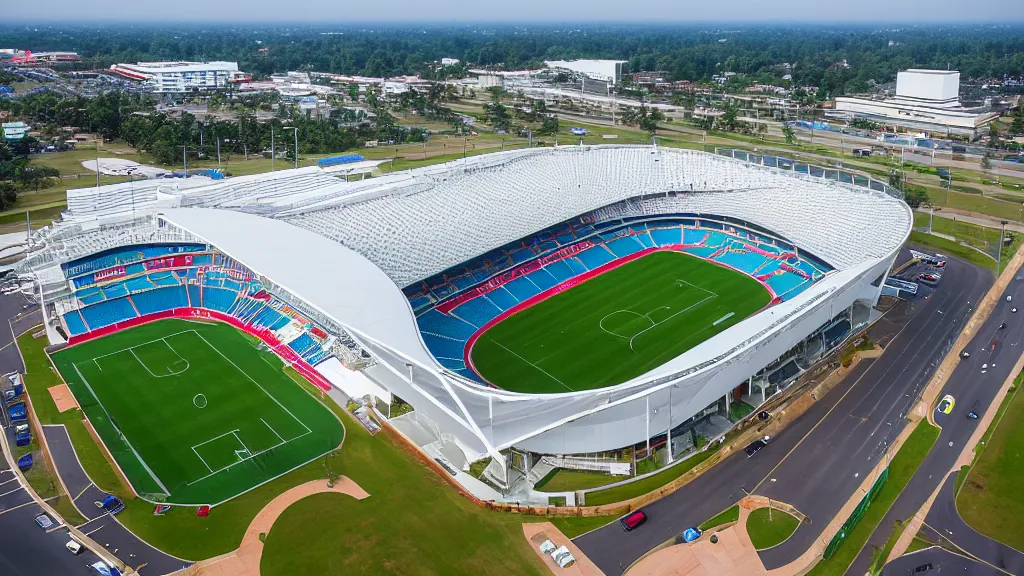 Asaba
AsabaTravel & attractions
Fort Wayne
Asaba
Real estate & living comparison
| Fort Wayne | Asaba | |
|---|---|---|
| International Primary School, Annual Tuition per Child | 34300 USD | 1105.45 USD |
| GDP Growth Rate: | 2.89 USD | 2.86 USD |
| GDP Per Capita ($) : | 74600 USD | 5600 USD |
| Population | 345,279 | 500,000 |
Last updated: 2026-04-05T11:23:19+00:00
Comments for this comparison